
- January 22, 2026
- AD Staff Writer
- News
Public Offers Guidance on 2026-27 Area Plan Update
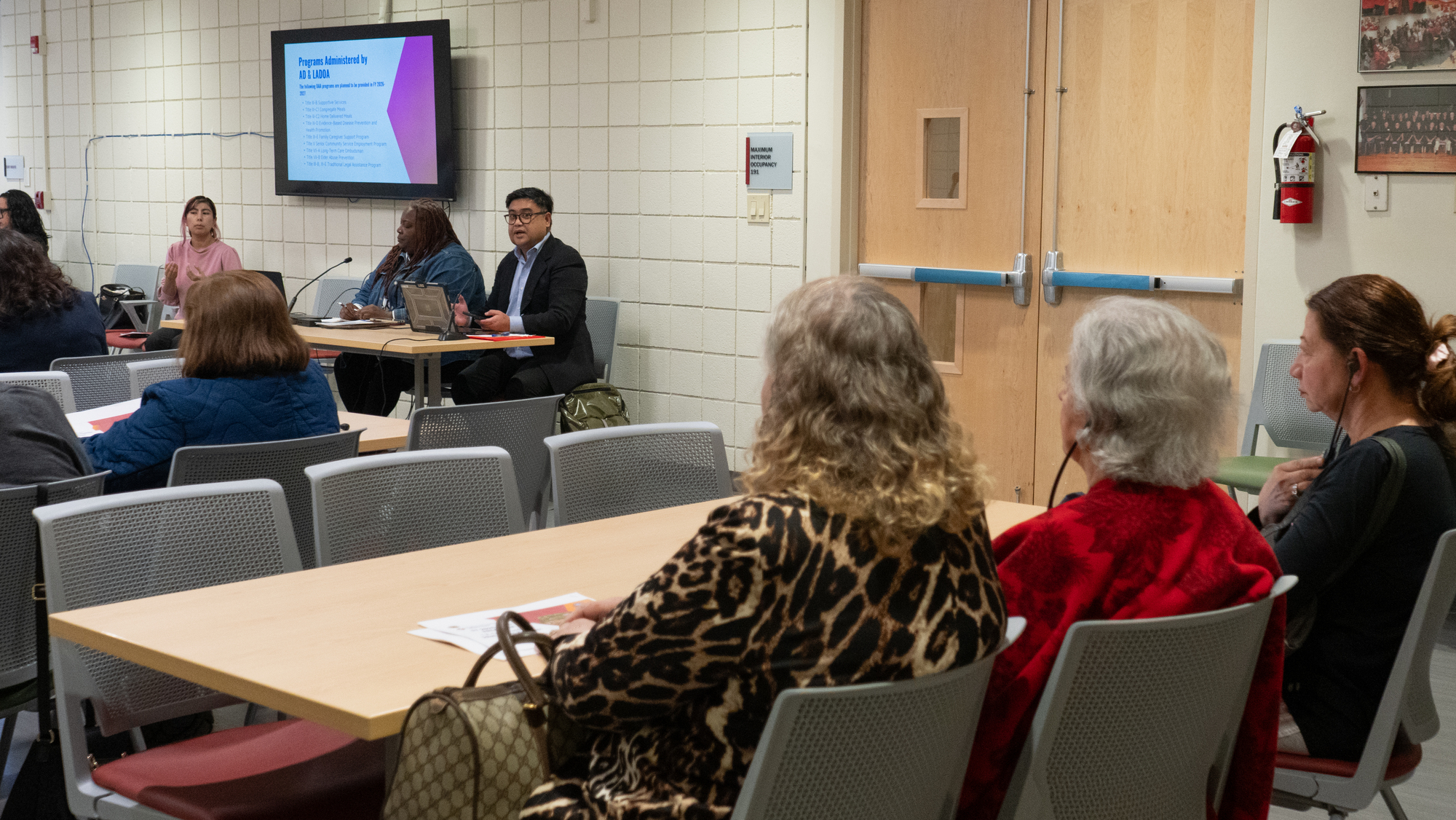
A series of public hearings were held earlier this month to gather feedback to help shape the FY 2026–2027 Area Plan Update, a plan that outlines goals, priorities, and strategies for programs and services supporting older adults, adults with disabilities, caregivers, and families throughout Los Angeles County.
“Public hearings are a key part of the Area Plan process, which serves as the Los Angeles County Area Agency on Aging’s (AAA) roadmap for how the Aging & Disabilities Department (AD) prioritizes resources and services for older adults, caregivers, and adults with disabilities,” said Miguel Robleto, AD’s Program Manager for its AAA Branch.
“These hearings provide a formal opportunity for community members to share their experiences, identify priorities, and raise emerging needs,” Robleto said. “Public input is reviewed by the Area Agency on Aging and the Los Angeles County Commission for Older Adults (LACCOA) and helps guide policy recommendations, funding priorities, and future program development so that the Area Plan reflects both community voices and community oversight.”
Held jointly by AD and the City of Los Angeles Department of Aging, the hearings provided an opportunity for stakeholders to speak directly with decision-makers, ensuring that the needs of older adults and people with disabilities are considered in planning and prioritization.
The Area Plan guides services funded by the Older Americans Act (OAA), the Older Californians Act (OCA), and Community Development Block Grants (CDBG).
Comments from the hearings, as well as those submitted in writing, will be reviewed by planning staff from both the County and City of Los Angeles. Feedback will help refine priorities and strategies, identify unmet needs, improve service delivery, and strengthen partnerships with community organizations.
The City and County of Los Angeles will submit a joint plan to the California Department of Aging (CDA) outlining the regional approach to providing comprehensive services to older adults, people with disabilities, and caregivers.
Public hearings took place in San Pedro, the San Gabriel Valley, the Antelope Valley, Reseda, and Los Angeles, with an additional virtual hearing conducted online.
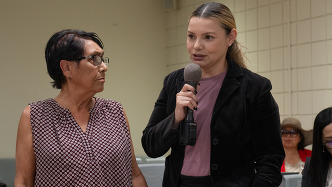
Participants were encouraged to share their thoughts and concerns, ask questions, and make suggestions on how services can be improved.
Presentations during the hearings included an overview of key services funded through the Area Plan, such as health and wellness programs, nutrition services, accessible transportation, care management, social engagement opportunities, and emergency preparedness. The hearings also gave community members an opportunity to learn more about available support, including caregiver services.
During the hearings, several speakers asked the County and City AAAs to continue their partnerships and funding for organizations providing caregiver support.
“The demand for services is increasing as the population of older adults grows, but at the same time, social programs caregivers rely on are being cut,” noted Efren Moreno, Senior Manager of Education and Outreach for Alzheimer’s Los Angeles.
“During this time of increased vulnerability, it is more important than ever for people living with dementia and their family caregivers that the City and County AAAs continue to reliably provide the full range of family caregiver support program services in partnership with organizations that have expertise in serving people living with dementia,” Moreno said.
Moreno also asked for the continued support of L.A. Found, which provides tracking devices that help caregivers and law enforcement locate people with dementia who wander off.
Another request was for the City and County to work together on a voluntary special needs registry to help first responders locate older adults and people with disabilities during emergencies, such as last January’s wildfires.
Stephanie Fajuri, Program Director for the Center for Healthcare Rights (healthcarerights.org), asked for continued financial support for her organization and help raising awareness of the Medicare and health insurance counseling services it provides.
Fajuri told the audience she often hears comments from long-time Angelenos who say they wish they had known her organization existed when they became eligible for Medicare.
Darren Dunaway, Director of Senior Services for the Human Services Association (HSA), said the ongoing partnership with the County has made it possible for his organization to provide services such as congregate meals, Alzheimer’s day care, and Medi-Cal enrollment assistance.
However, increasing demands for services and shrinking budgets are creating a situation where “the network is weaker and the holes in the safety net are bigger,” Dunaway commented.
“The providers out there are fewer, but we’re also mighty, and we’re here to support the County and these programs for our seniors,” Dunaway said.
Supporting congregate meal services was another major request at the hearings.
“One of the biggest needs this year, of course, is meals,” said Kevin MacDonald, Chief Executive Officer of the Santa Clarita Valley Senior Center (scvseniorcenter.org), a nonprofit that provides services for older adults. “We have more waiting lists and they continue to grow, so that needs to be addressed in the plan.”
Laura Dominguez, who attended the San Gabriel Valley hearing, said she was concerned about federal budget cuts to programs serving people with disabilities but hopeful the County could expand services.
“I’d like to see more mentoring support for people with disabilities and people in foster care,” Dominguez said.
Alma Parks, who visits the Antelope Valley Senior Center to socialize, said she would like to see the County offer an all-in-one payment for low-income older adults to cover rent and utilities.
“For a lot of these people, their income is not sufficient to cover electric and gas costs and pay rent,” Parks said.
For those who couldn’t attend the hearings, there are still opportunities to provide input. Written comments can be submitted via email at aaaprogram@ad.lacounty.gov and ladoa.planning@lacity.org.
Area Plans are submitted to the California Department of Aging every four years, with annual updates. The 2024–2028 Area Plan went into effect on July 1, 2024.