
- February 18, 2026
- AD Staff Writer
- News
New Budget Format Highlights Transparency and Community Impact
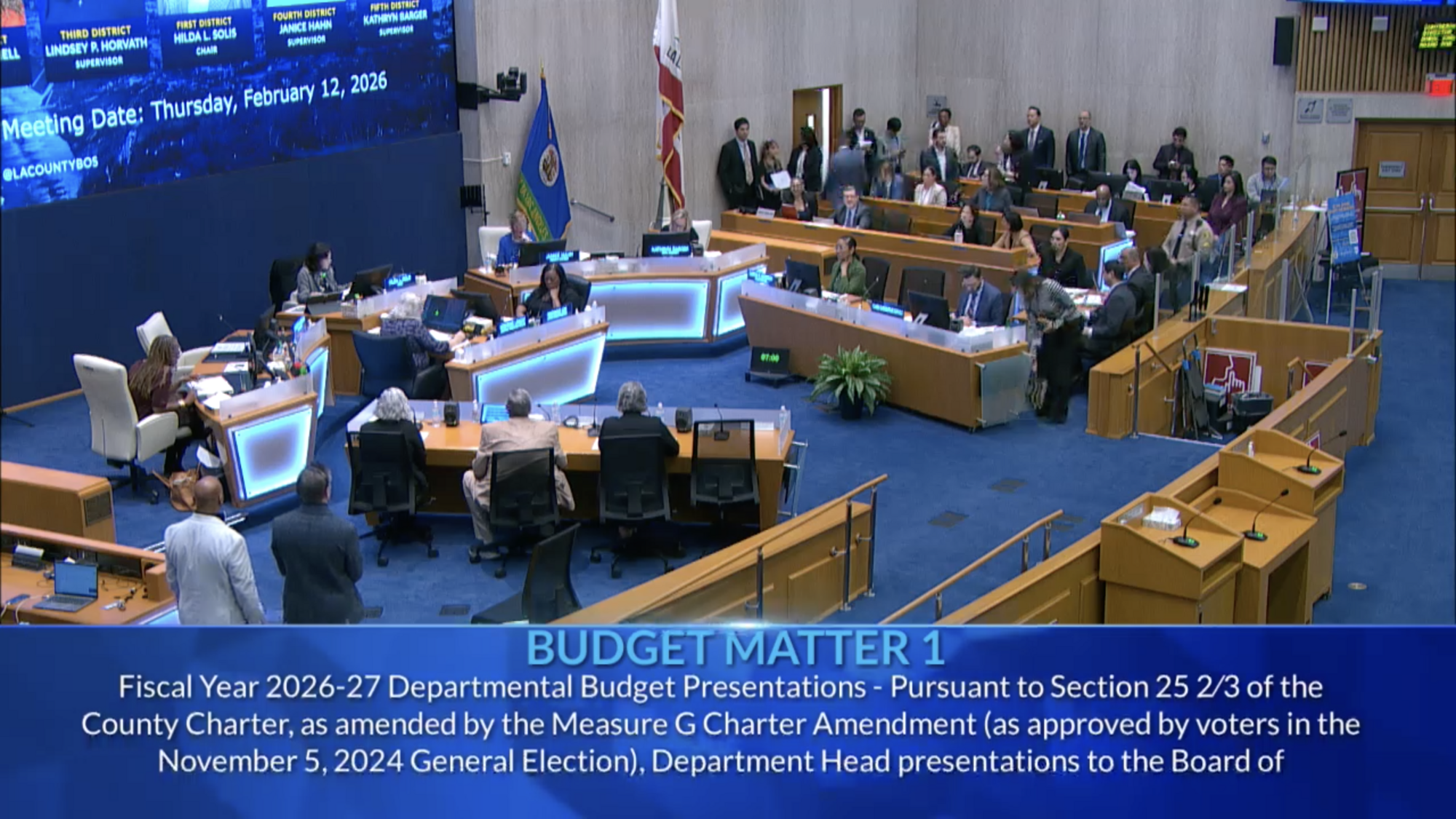
For the first time, the Los Angeles County Board of Supervisors (BOS) held departmental budget presentations in a new public format designed to make the County’s budget process more transparent and easier to understand.
The February 12 special meeting introduced new opportunities for public engagement, including a newly launched survey inviting residents to provide input on County priorities. The updated structure reflects recommendations from the Government Reform Task Force (GRTF), including organizing departments by service clusters, limiting financial jargon, and using a consistent six-slide framework covering mission and core duties, current budget, programs and services, priorities and outcomes, budget highlights, and challenges.
The Aging & Disabilities Department (AD) presented alongside the Department of Public Social Services (DPSS) and the Department of Children and Family Services (DCFS) as part of the Social Services cluster.
Across departments, supervisors discussed rising demand for safety net services, federal and state funding uncertainty, and the importance of prevention and coordination.
AD Director Maral Karaccusian framed the department’s work around protecting vulnerable adults and helping residents remain safely in their homes, emphasizing that people thrive when they have control over their lives.
The department’s $206.5 million budget supports the County’s Adult Protective Services (APS), Area Agency on Aging (AAA), community and senior centers, nutrition programs, and disability initiatives. Approximately 43 percent of funding supports staffing, with the remainder primarily funding contracted community services.
Several key themes emerged from AD’s budget presentation.
Adult Protective Services continues to see increased caseloads following legislation that lowered the eligibility age from 65 to 60. Recruiting and retaining qualified social workers remains a priority to ensure timely investigations and support for vulnerable adults.
The Elder Nutrition Program (ENP) faces growing demand as federal relief funds have ended. More than 1,000 older adults are currently on waitlists for congregate meals, and additional funding would be required to maintain current service levels. Supervisors noted that senior centers play a critical role not only in nutrition but also in reducing isolation and strengthening community connections.
The department also highlighted its focus on disability services and a “no wrong door” approach to ensure residents can access supports regardless of their entry point into the system. Efforts are underway to strengthen partnerships with Independent Living Centers (ILC) and expand coordinated access to services.
Supervisors, including Kathryn Barger and Holly J. Mitchell, acknowledged the fiscal pressures departments are facing while emphasizing the importance of protecting core services for vulnerable residents.
The new presentation format provided a clearer picture of how County resources are allocated and how departments are responding to growing needs.
For the Aging & Disabilities Department, Director Karaccusian emphasized that, even in a constrained fiscal environment, protecting vulnerable adults and promoting independence remain central priorities for the year ahead.