- June 11, 2025
- AD Staff Writer
- News
Community Voices Help Shape the Future of Aging in California
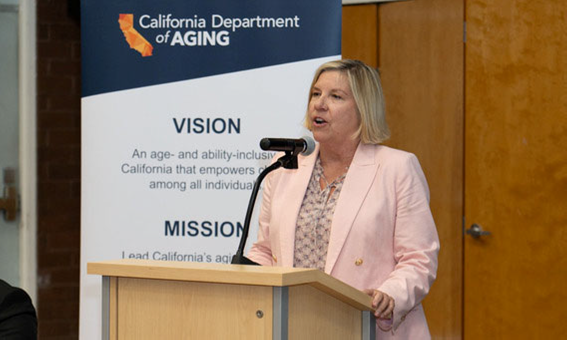
On June 6, 2025, the California Department of Aging (CDA) held a public listening session at the East Los Angeles Service Center, hosted in partnership with the Los Angeles County Aging & Disabilities Department (AD). The purpose: to gather community input on the 2025-29 State Plan for Aging, which will guide policies and programs serving older adults, people with disabilities, and family caregivers over the next four years.
Susan DeMarois, Director of the California Department of Aging, presented the six key goals of the upcoming plan, which focus on building community engagement, supporting local master plans, expanding access for tribal and underserved populations, coordinating cross-sector services, improving financial security, and equipping aging service providers with better tools, training, and technology. Each goal includes specific objectives—such as enhancing Medicare outreach, aligning aging services with emergency and housing systems, and strengthening partnerships with healthcare and community-based organizations.
Housing and aging-in-place emerged as a top concern. Members of the public called for a fair, statewide system to apply for affordable housing, along with expanded programs to help older adults make home modifications and age safely at home.
Language access and cultural inclusion were also highlighted. Commissioners and community leaders emphasized the need for more multilingual outreach—especially in Spanish, Mandarin, and culturally relevant formats—to reach underserved communities. There were also calls to clarify what “culturally responsive services” mean in practice, particularly for African American and LGBTQ+ older adults.
Participants, who included members of the L.A. County Commission on Older Adults, asked for more clarity around the tools and trainings CDA will provide to service providers and local jurisdictions. Several urged CDA to support seniors with practical help navigating systems—not just handing out information.
Nonprofit providers expressed concern about the growing challenges they face.
They urged CDA to protect community-based organizations from being edged out by for-profit entities and called for fairer funding and support to help them stay afloat.
Caregivers’ voices were loud and clear: eligibility for services should reflect not just financial need, but also stress levels, caregiving demands, and overall wellbeing. Participants encouraged CDA to align with national caregiver strategies and promote evidence-based outreach efforts.
Finally, attendees highlighted the role of care managers as the “connective tissue” between services and those in need—and the importance of ethical, inclusive use of AI to reach isolated older adults while guarding against fraud.
The session ended with gratitude—and a challenge: to make this plan real for every Californian. As CDA Director Susan DeMarois noted, “Tell us what we’re missing, what to amplify, and what to prioritize. Your feedback helps us do better.”
If you couldn’t attend but want to share your input, please visit: aging.ca.gov/OAA_State_Plan