
- August 1, 2024
- AD Staff Writer
- News
Charting a Path to Accessible Parks
In a significant step towards inclusivity, the Los Angeles County Board of Supervisors adopted a motion on July 23, 2024, that will drive efforts to enhance accessibility across county parks. This initiative isn’t just about adding ramps—it’s about reimagining how parks can serve everyone, regardless of age or ability.
A Comprehensive Approach to Accessibility
Parks are more than just spaces for recreation—they are vital community hubs where people of all ages and abilities come together. Recognizing this, the Department of Parks and Recreation (Parks) is partnering with the Aging & Disabilities Department (AD) and the Los Angeles County Commission on Disabilities (LACCOD) to develop Universal Design guidelines. These guidelines will ensure that future park projects, whether new constructions or renovations, are accessible to all.
As Commissioner Carlos Benavides, LACCOD’s President emphasized, “Accessible parks ensure that everyone, regardless of their physical abilities, can enjoy the benefits of nature, recreation, and community engagement. By providing facilities such as wheelchair ramps, accessible restrooms, benches at a height that someone can transfer out of a wheelchair and onto the bench, as well as smooth pathways, we create an inclusive environment that encourages participation from all members of the community. Similarly, playground design should allow people using a wheelchair to push a child on a swing or a merry-go-round.”
Beyond Compliance: Building Truly Inclusive Spaces
The initiative goes beyond mere compliance with the Americans with Disabilities Act (ADA). It embraces a Universal Design approach that makes parks functional for all people, minimizing the need for adaptations or specializations. This is crucial for older adults and people with disabilities who often face barriers when accessing public spaces. “The Universal Design approach is more than just ramps. It’s about making play areas more accessible for kids with different abilities, along with making one gym per district more accessible for all to be able to work out,” added Benavides.
Commissioner Deaka McClain underscored the importance of this approach: “Nothing about us, without us. Accessibility should be a forethought, not an afterthought. This is a win-win-win.”
A Collaborative Effort
The motion also calls for the establishment of a Parks Accessibility Task Force, which will work over the next year to create these guidelines. This task force will include representatives from each Supervisorial District, ensuring that the needs of diverse communities are met.
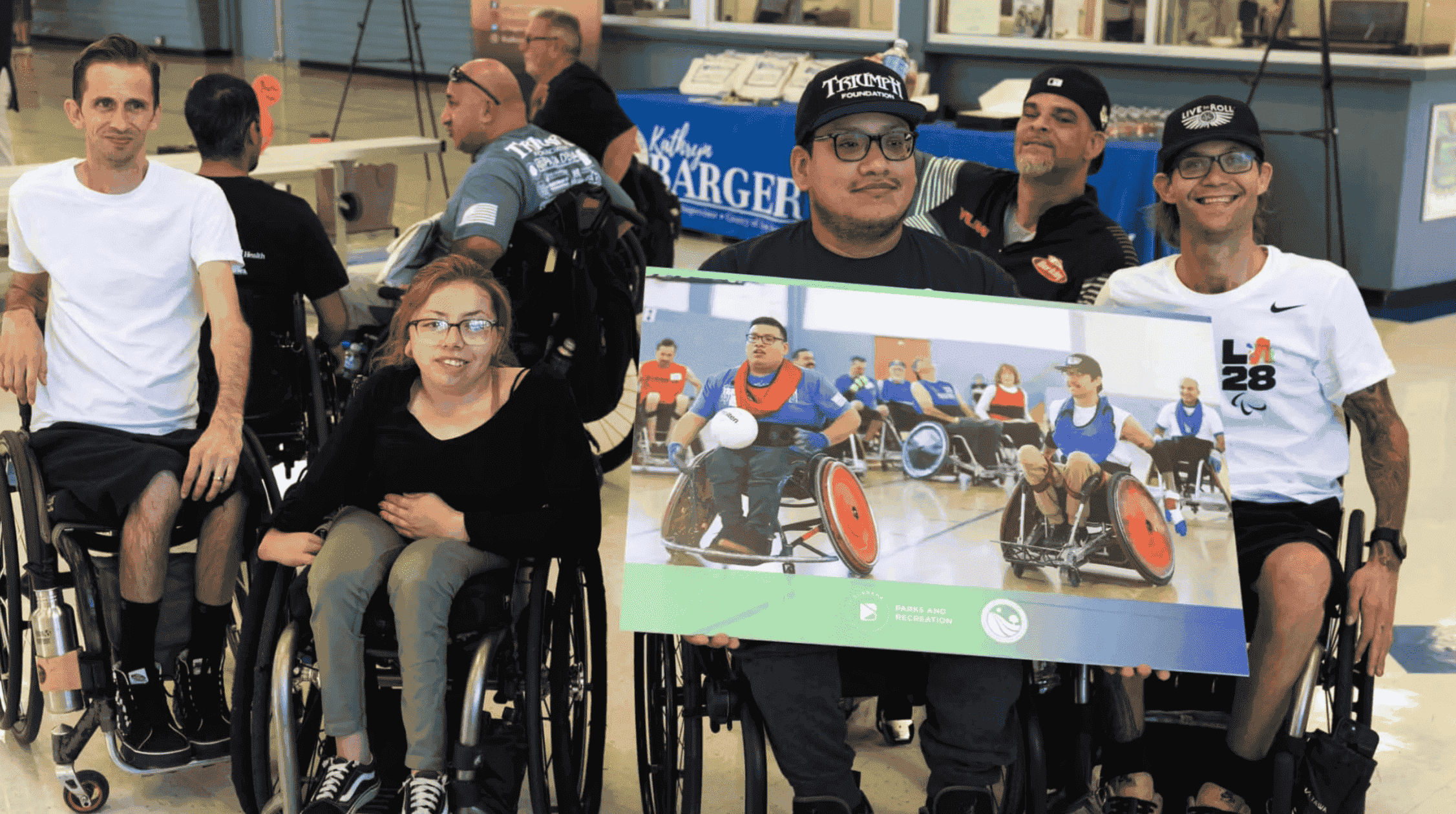
Parks’ commitment to inclusivity extends to its existing programs as well. Through the “Let’s Play Outside” campaign, Parks has partnered with community-based organizations to offer free adaptive sports clinics, supported by additional American Rescue Plan Act (ARPA) funding secured by the Board of Supervisors. This funding will ensure that adaptive sports programs are available in every Supervisorial District through December 2024.
A Vision for the Future
The initiative reflects a broader vision of creating parks that serve as vibrant, inclusive spaces for everyone. As Commissioner McClain stated, “The more welcoming and inclusive, the better, as having these spaces accessible to more people helps create a more connected and healthy community.”
With these efforts, Los Angeles County is taking significant strides toward ensuring that everyone—regardless of ability—can fully enjoy the beauty and benefits of its parks.
Image courtesy of Fifth Supervisorial District