World Elder Abuse Awareness Day 2026

World Elder Abuse Awareness Day (WEAAD) is recognized each year on June 15 and observed through a month-long campaign over the entire month of June.
Launched in 2006 by the International Network for the Prevention of Elder Abuse (inpea.net) and later recognized by the United Nations (UN), WEAAD brings global attention to the abuse, neglect, and exploitation of older and dependent adults.
In Los Angeles County, WEAAD is more than a single day. It is a month-long effort that includes community events, educational workshops, digital outreach, and storytelling that elevate awareness and prevention.
This campaign connects directly to the work of Adult Protective Services (APS) and community partners who support the safety, dignity, and independence of older and dependent adults.
WEAAD 2026 is a coordinated, month-long awareness effort led by the L.A. County Aging & Disabilities Department, in collaboration with its Adult Protective Services (APS) program.
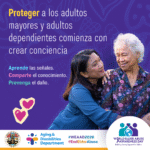
This year’s campaign theme, “Protecting Older and Dependent Adults Starts Through Awareness: Learn the signs. Share the knowledge. Prevent the harm.” centers on prevention through education and community action.
The campaign helps residents recognize the signs of abuse, understand how to respond, and feel confident in taking action. Through events, storytelling, and digital outreach, it highlights the role we all play in protecting vulnerable adults and preventing harm before it happens.
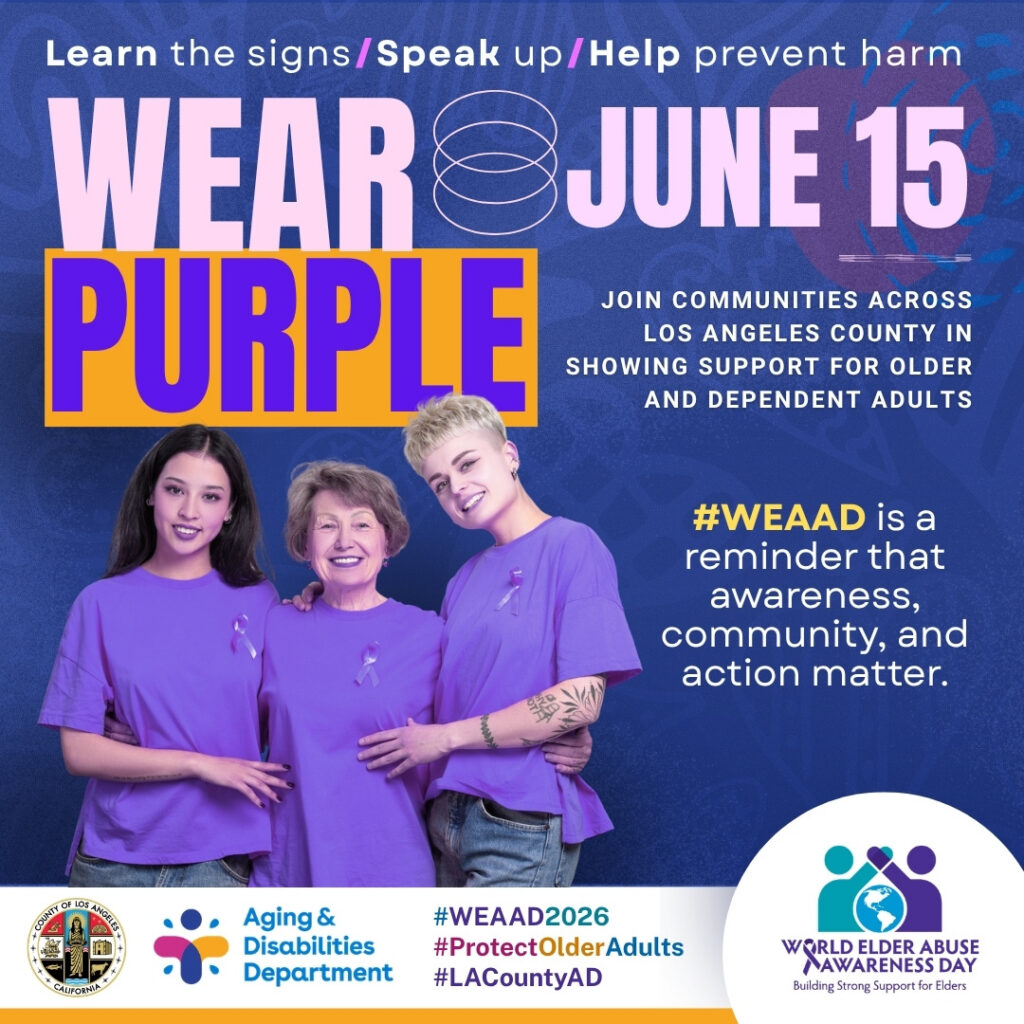
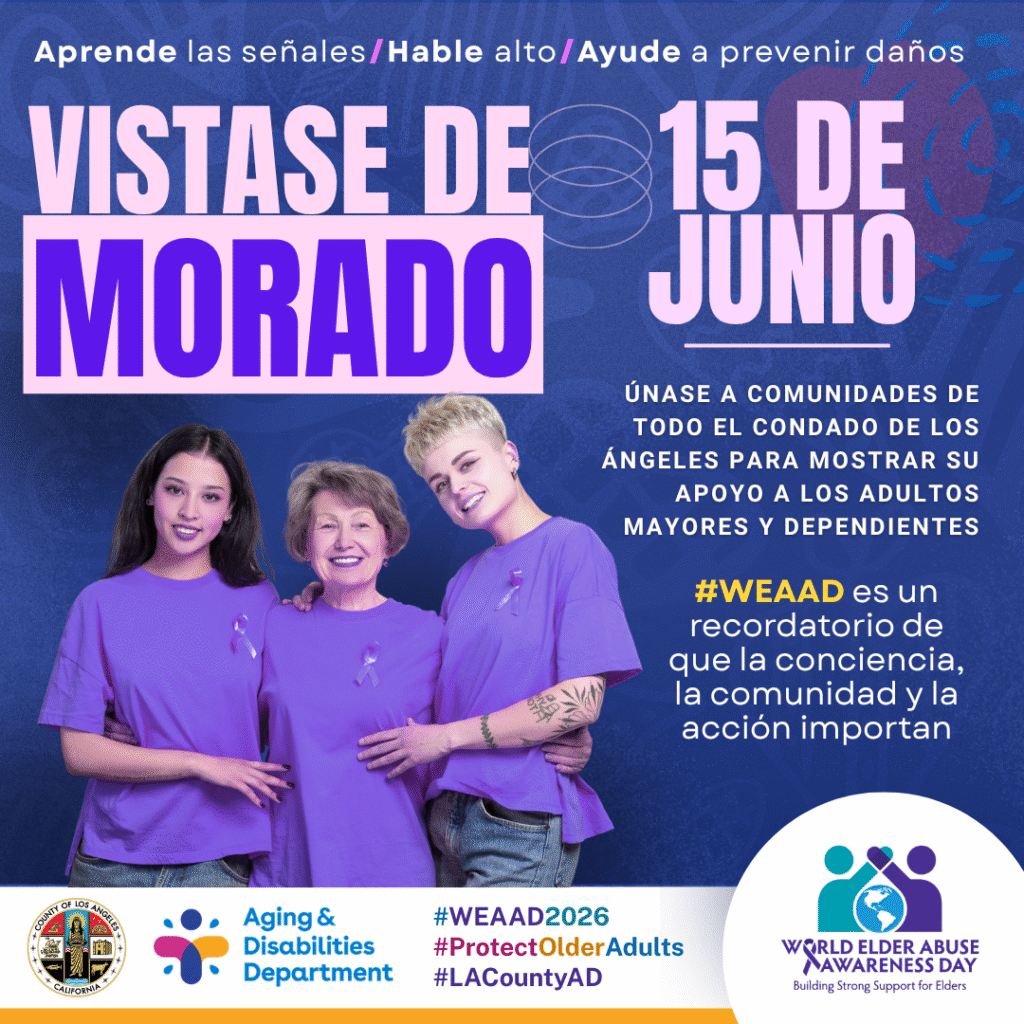
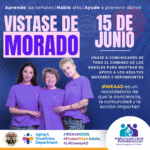
The effort builds throughout June and culminates on June 15, when communities across the county and around the world wear purple to show support for older adults and stand against abuse.
Increase public awareness of older and dependent adult abuse.
Help residents recognize warning signs and risk factors.
Promote reporting pathways and community responsibility.
Highlight the role of APS and community-based prevention.
Reinforce dignity, respect, and inclusion for older adults.
Elder abuse is preventable; awareness is the first step.
Abuse can happen to anyone, in any community.
Knowing the signs can save someone from harm.
Reporting concerns can protect lives and is the right thing to do.
APS works with communities to support safety, dignity, and independence.
Everyone has a role in protecting older and dependent adult.
Date: Tuesday, June 23, 2026
Time: 10:00 AM – 12:00 PM
Location: Hacienda Heights Community Center (Theater Room)
1234 Valencia Avenue, Hacienda Heights, CA 91745
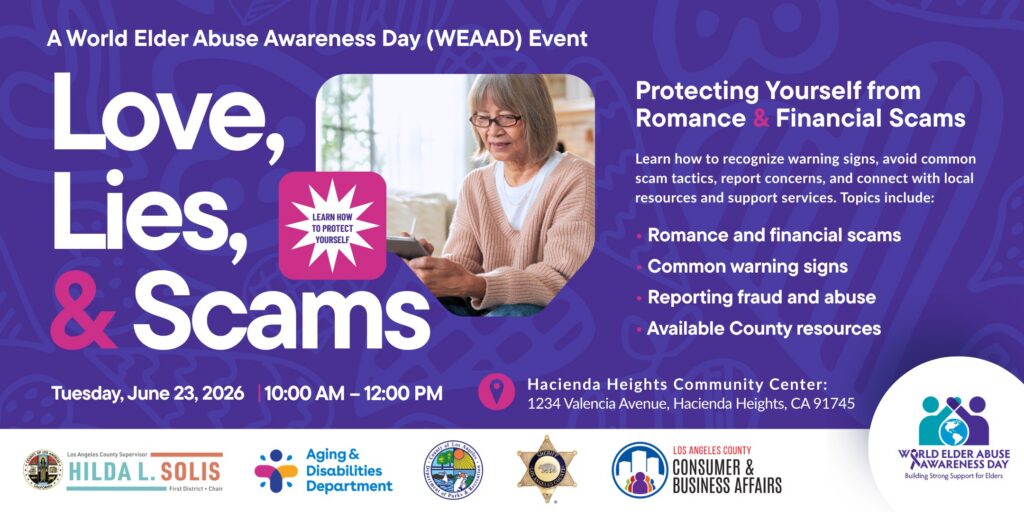
Older adults are increasingly being targeted by sophisticated scams that exploit trust, relationships, and technology.
This free community event will provide practical information to help older adults, caregivers, and family members better understand these risks and learn how to respond if concerns arise.
The session will focus on prevention, awareness, reporting, and recovery, while highlighting local resources available to support individuals and families affected by fraud and financial exploitation.
————————————————————————————————————————————————-
Streaming Premiere: Thursday, June 25, 2026
Time: 12:00 PM
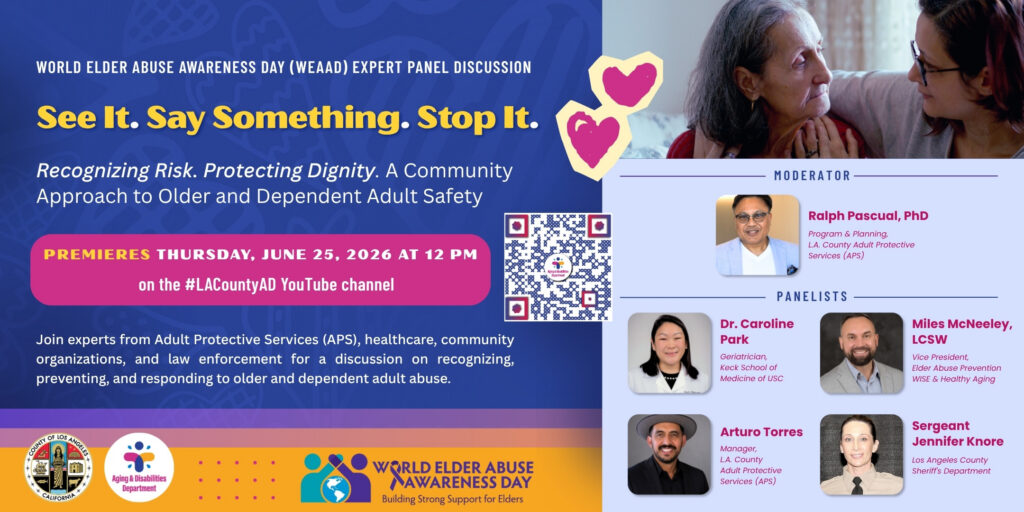
This panel brings together experts from healthcare, social services, and law enforcement, to discuss key issues in preventing and identifying elder and dependent adult abuse.
Using real APS data, the speakers highlight current trends, warning signs of psychological, physical, financial, and neglect-related abuse, and practical steps for reporting concerns. Viewers will also learn about available services, community resources, and how multidisciplinary collaboration supports the safety and well-being of older and dependent adults.
What psychological and mental abuse may look like and practical ways to prevent it
Key factors that may put individuals’ health and safety at risk
Ways individuals and their loved ones can maintain health and safety and reduce the risk of self-neglect
How to spot financial abuse and understand when law enforcement may be able to help
Simple steps everyone can take to protect themselves or loved ones from financial exploitation
Services and support available for people experiencing financial abuse
Warning signs of neglect and when it’s time to report concerns
How to report older and dependent adult abuse quickly and safely
Community resources that are available for individuals and families who need support
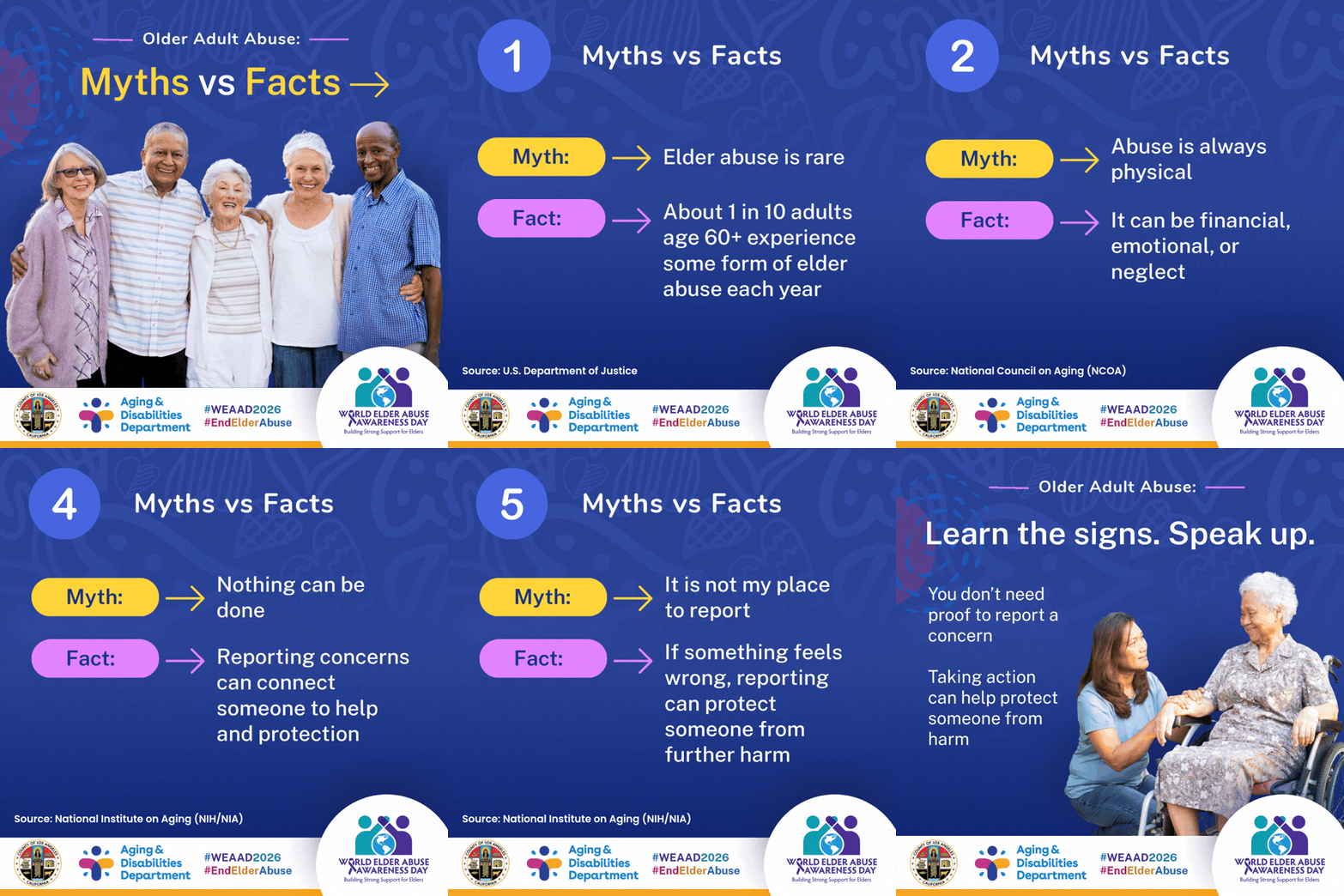
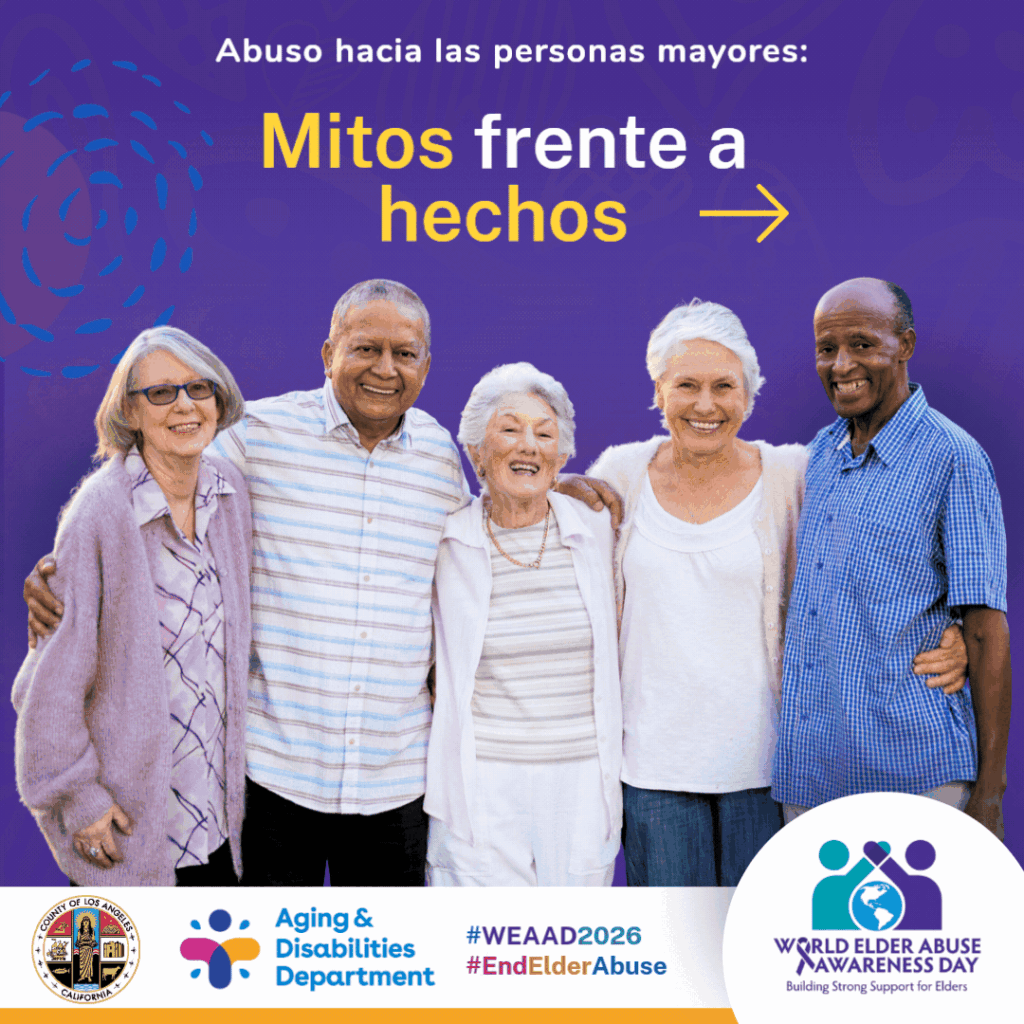
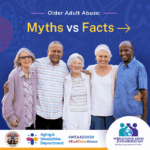
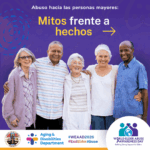
Myth: Elder abuse is rare
Fact: Millions (1 in 10) of older adults experience abuse each year, and many cases go unreported
Source: U.S. Department of Justice
Myth: Abuse is always physical
Fact: Abuse can be financial, emotional, neglectful, or involve exploitation
Source: National Council on Aging (NCOA)
Myth: It only happens in institution
Fact: Most abuse occurs in private homes, often involving someone the abused person knows
Source: World Health Organization (WHO)
Myth: Nothing can be done
Fact: Reporting concerns connects individuals to APS and support services that can intervene
Source: National Institute on Aging (NIH/NIA)
Myth: It is not my place to report
Fact: If something feels wrong, reporting can protect someone from further harm
Source: National Institute on Aging (NIH/NIA)
Learn more through the National Council on Aging (NCOA); the U.S. Department of Justice; the Centers for Disease Control and Prevention (CDC); or the World Health Organization (WHO).
APS Stories from the Field: Protecting Dignity Every Day
This video series features voices from Adult Protective Services (APS) professionals sharing their experiences working with older and dependent adults in Los Angeles County.
Through brief reflections, they talk about what they see in the field, the signs of abuse, and why this work matters.
(Videos play one after another).
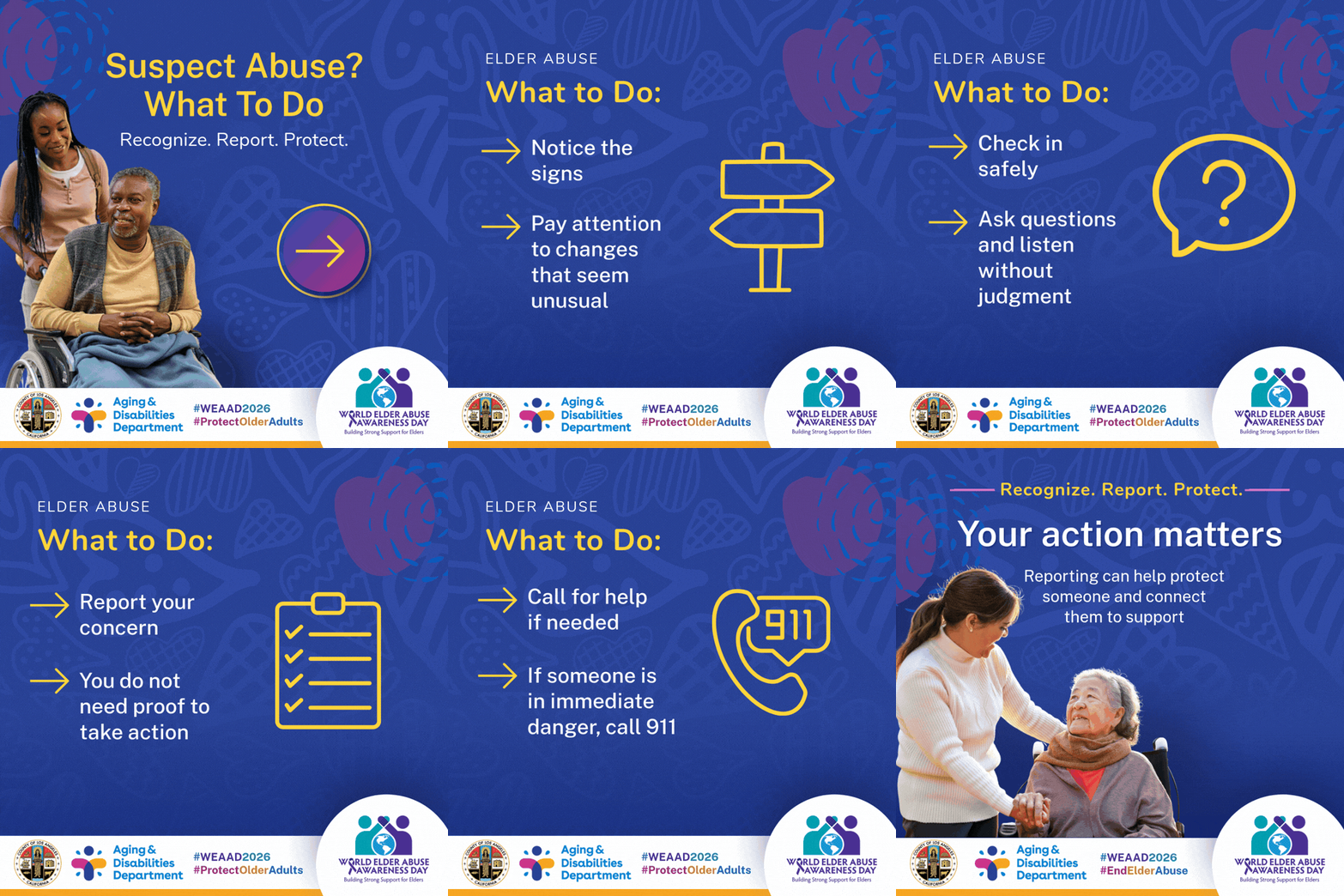
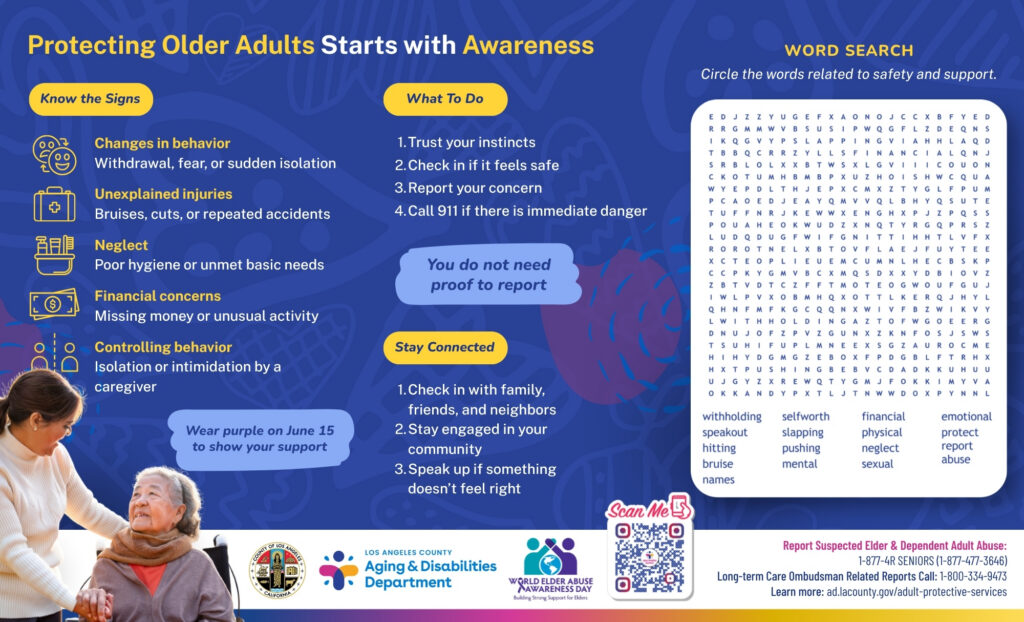
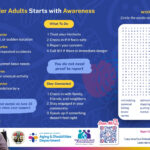
If something feels wrong, trust your instincts. You do not need proof to take action. Reporting a concern can help protect someone from further harm.
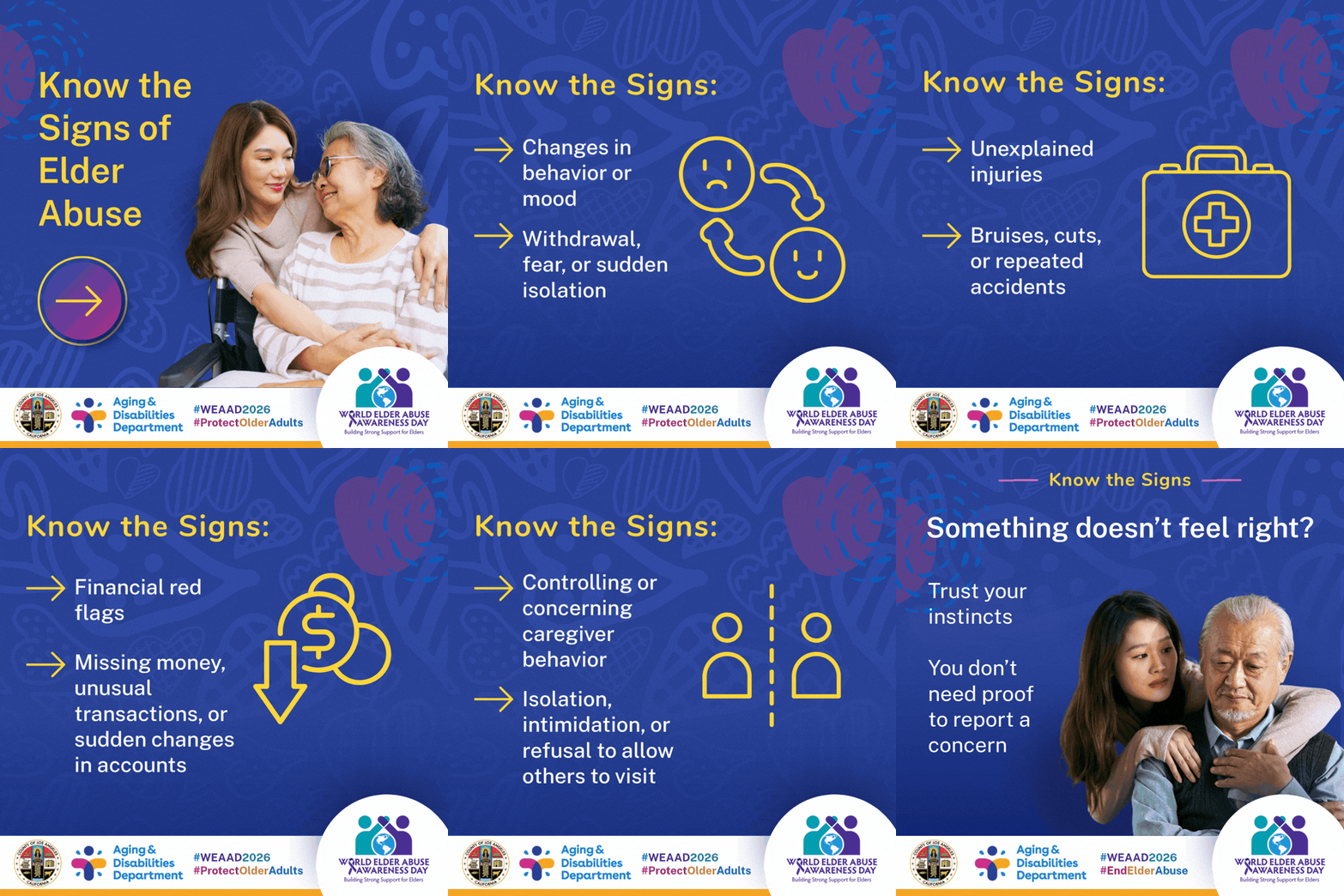
1. Recognize the signs
Look for changes that seem unusual or unexplained, such as:
Sudden withdrawal or fearfulness
Poor hygiene or unmet basic needs
Unexplained injuries
Missing money or unusual financial activity
A caregiver who is controlling, aggressive, or isolating
2. Check in, if it feels safe
If appropriate, gently ask questions and show concern:
Speak privately and respectfully
Avoid judgment or confrontation
Let the person know that help is available
3. Report your concern
In Los Angeles County, contact Adult Protective Services (APS)
Reports can be made by anyone
You can remain anonymous
Trained professionals will assess and respond
If someone is in immediate danger, call 911.
4. Share accurate information
Help prevent harm by sharing trusted resources.
Avoid spreading unverified information. Stick to facts and official guidance.
5. Stay engaged
Prevention starts with community:
Check in regularly with older adults in your life
Stay connected to neighbors and community members
Speak up when something does not feel right
Remember: Reporting is about making sure someone is safe.
Wear purple on June 15 to show support.
Start conversations with family, friends, and neighbors.
Learn the signs of abuse.
Check in on older adults in your community.
Attend a WEAAD event or webinar.
Share verified resources and reporting information.
We invite you to be part of this year’s campaign by learning the signs of elder abuse, sharing trusted information, and helping raise awareness in your community.
Start a conversation. Check in on someone. Speak up if something doesn’t feel right.
Follow along, share resources, and join the effort to protect older and dependent adults across Los Angeles County.
#WEAAD2026
#EndElderAbuse
#ProtectOlderAdults
#APS
#AgingWithDignity
#LACounty
Post 1
June 15 is World Elder Abuse Awareness Day. We support @LaCountyAD in raising awareness and protecting older adults in our communities. Learn the signs. Speak up. Take action.
#WEAAD2026 #ProtectOlderAdults
Post 2
Elder abuse can take many forms, including financial exploitation and neglect. Knowing what to look for can make a difference. Learn more and help prevent harm.
#WEAAD2026 #EndElderAbuse
Post 3
Wear purple on June 15 to stand with older adults and show your commitment to dignity and respect for all. #WEAAD2026 #ProtectOlderAdults #EndElderAbuse
Post 4
If you suspect elder abuse, do not ignore it. Reporting concerns can connect someone to help and protection. Learn more through @LACountyAD
#ProtectOlderAdults #APS #EndElderAbuse
Post 5
Adult Protective Services #APS works every day to support safety, independence, and dignity for older and dependent adults in @CountyofLA. Learn how you can help at @LACountyAD.
#APS #ProtectOlderAdults #EndElderAbuse
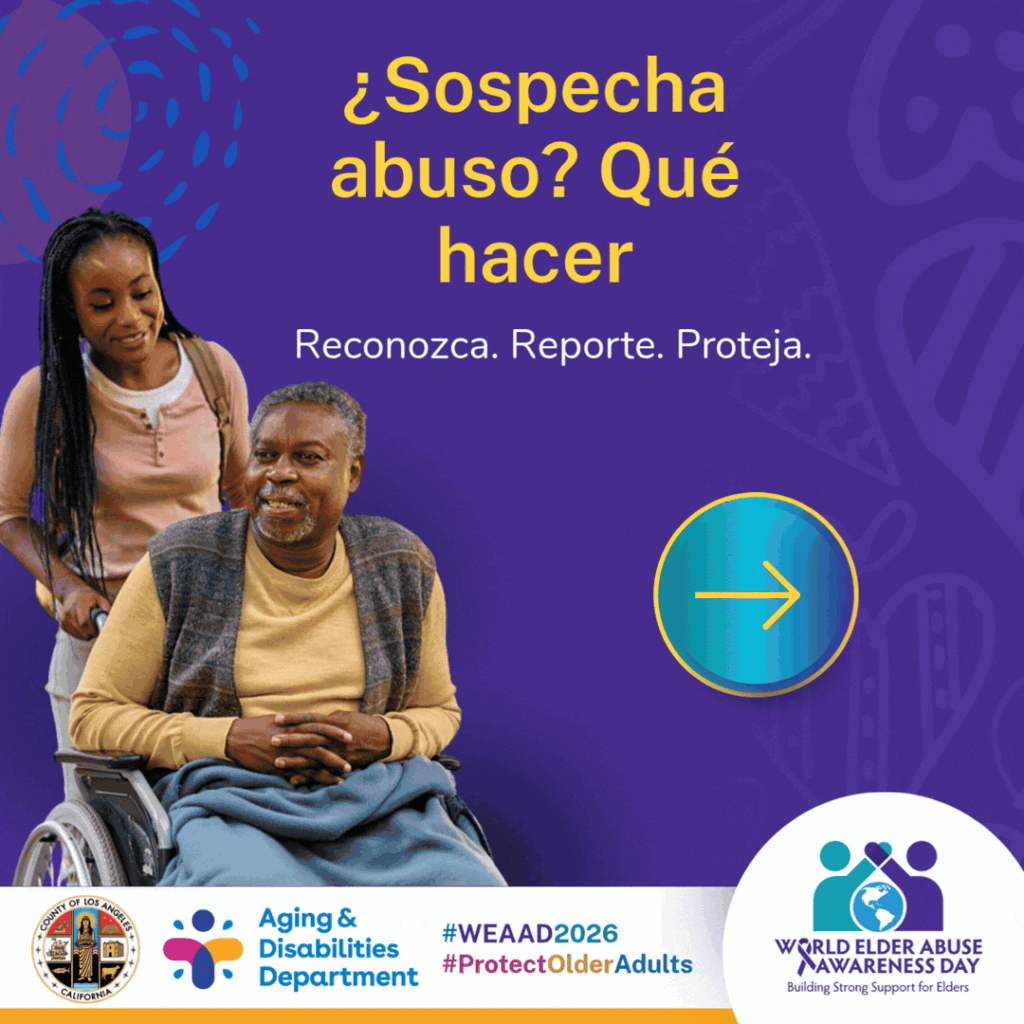
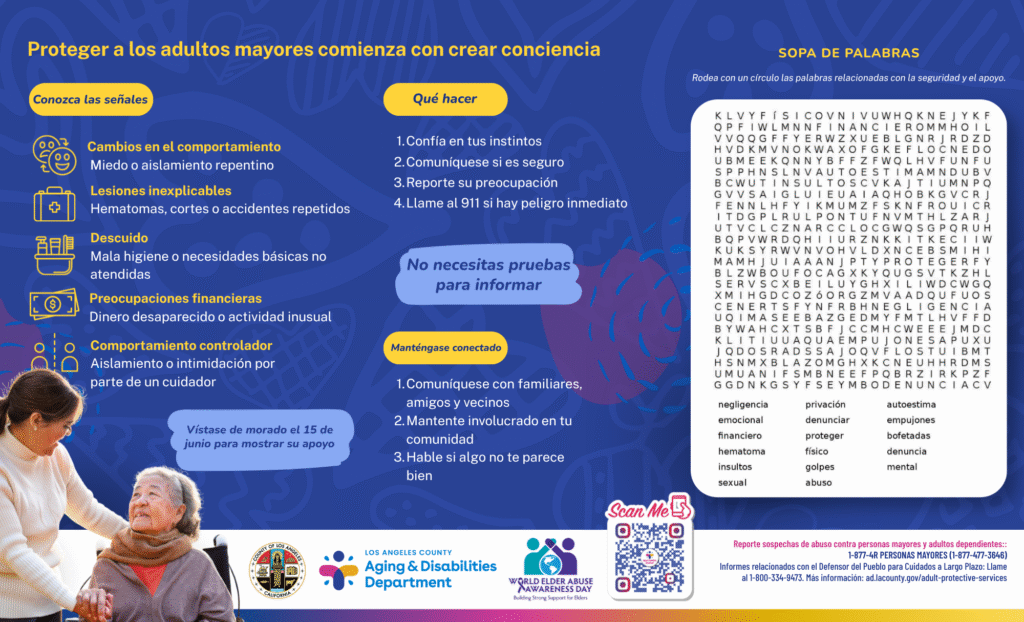
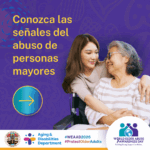
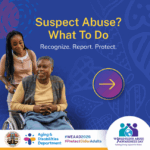
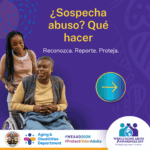
Click the plus (+) button and then right-click to download any of the images/graphics below.


Get updates on this issue and other services for older adults and people with disabilities by subscribing to the Aging & Disabilities Department’s newsletter.