- July 2, 2026
- AD Staff Writer
- News
Love, Lies, and Scams: Protecting Older Adults from Romance and Financial Fraud
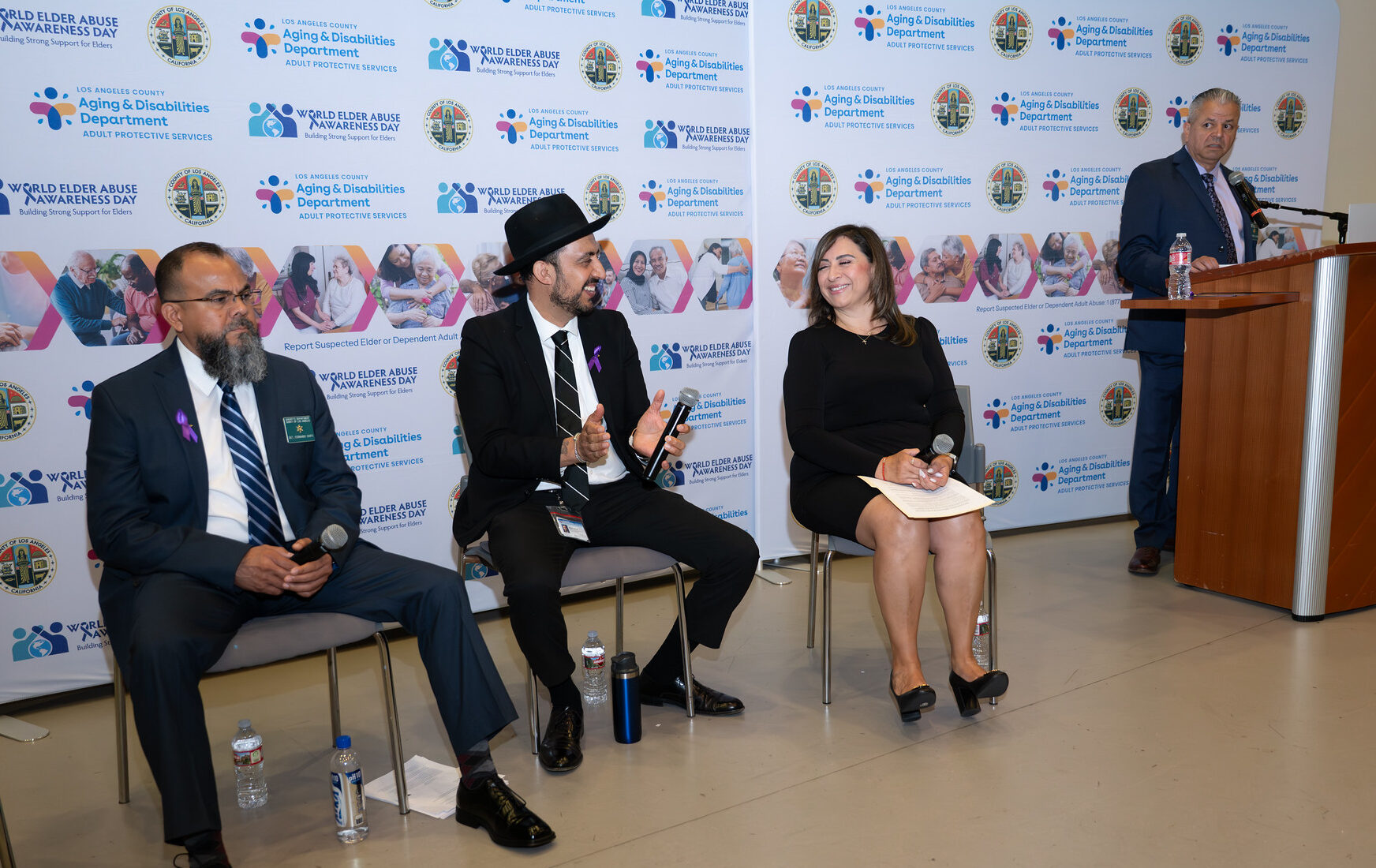
On June 23, 2026, the Hacienda Heights Community Center became a hub for advocacy and education as community members gathered for the “Love, Lies, & Scams: Protecting Yourself from Romance & Financial Scams,” event, focused on safeguarding older adults from the growing threat of scams and financial exploitation.
The event, organized by the L.A. County Aging and Disabilities Department (AD) in partnership with the Sheriff’s Department (LASD), the Department of Consumer and Business Affairs (DCBA), and First District Supervisor Hilda Solis, was part of this year’s World Elder Abuse Awareness Day (WEAAD) campaign; it brought together experts, service providers, and residents for an educational conversation.
LASD Lieutenant Antonio Leon opened the program with a stark warning: scams targeting older adults are surging. Citing the FBI’s 2025 Internet Computer Crimes Report, Leon noted a 59% increase in online scams affecting people aged 60 and older. In L.A. County alone, financial losses from scams soared from $5.2 million in 2024 to $11.6 million in 2025. It’s a 120% jump… and double the national average. “These numbers only scratch the surface,” Leon said, “since so many victims never report what happened.” He also stressed the emotional toll on victims sharing that they often lose trust in others and themselves and can experience profound isolation and distress.
Panelists included LASD Investigator Fernando Sarti, AD Adult Protective Services (APS) Manager Arturo Torres and DCBA Supervising Investigator Janet Godoy, who all described how scammers target older adults. Romance scams often begin with a phone call, email, or text from someone posing as a caring companion. Once trust is gained, the scammer invents a crisis and asks for money, often via wire transfer or gift cards.
Other schemes include tech support scams where callers claim your computer has a virus and request remote access, and the “grandparent scam,” where someone impersonates a grandchild in distress and urgently requests money. With advances in technology, including AI voice mimicry, these scams have become more convincing than ever for targets.
Arturo Torres explained that isolation is a key risk factor. “Those who lack connections—family, friends, or community—are most at risk,” he said. Scammers prey on loneliness and sometimes even trusted family members can exploit theolder adults in their family. Torres urged everyone to reach out to isolated neighbors or relatives and noted that community involvement is one of the best defenses against fraud.
The panelists also discussed red flags like behavioral changes. It’s worth checking in if a usually cheerful neighbor becomes withdrawn, anxious, or secretive. Torres encouraged the community to notice when someone stops attending regular activities or seems “out of character,” as these behavioral shifts may signal manipulation or financial exploitation.
All panelists shared other helpful tips for protecting yourself and others from growing financial and romance scams.
Tips for protecting yourself from fraud:
- Be Skeptical: Never rush to act on urgent requests, especially those involving money or personal information. Scammers often pressure victims to act quickly.
- Verify Requests: If you get a suspicious call or message, independently verify the person’s identity call back numbers or emails, don’t use contact info provided in the message.
- Don’t Share Financial Info: Never send money or gift card codes to someone you don’t trust and have only communicated with online or by phone, and don’t share access to your accounts.
- Monitor Accounts: Check your bank and credit card statements regularly and review your credit report at least twice a year to spot unauthorized activity.
- Limit What You Carry: Carry only one credit card and essential IDs to reduce risk if your wallet is lost or stolen.
- Keep Devices Updated: Update your phone and computer software for the latest security protections.
- Report Abuse or Scams: Call 1-877-4R-SENIORS (1-877-477-3646) or report online.
The event closed with a powerful reminder: “You are not alone.” L.A. County offers resources and support to help prevent and respond to scams and abuse.
For more, visit the AD’s APS webpage.
Missed the event but want to learn more about elder abuse? Watch a similar community conversation on preventing elder abuse.